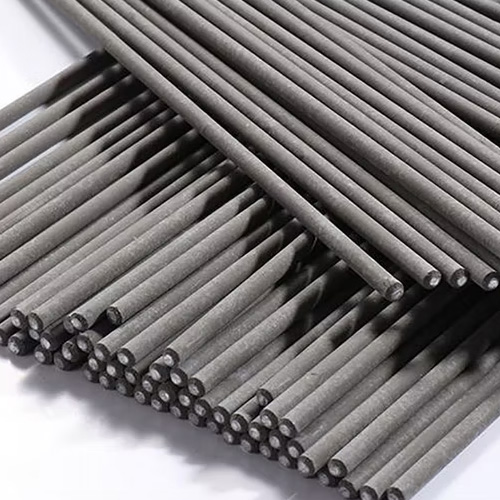
From a materials spec standpoint, the EC 33300 electrode corresponds to the AWS classification E310-16 (as given in the manufacturer’s technical data). It is also referenced under EN ISO 3581-A as E 25 20 R 12 in European standards. While the UNS number is not publicly stated in many data sheets, a logical association is to UNS S33300 given the matching “33300” designation frequently correlated with stainless grade 333 (although confirm this in your purchasing spec). (Note: Grade 333 is better known in bar/rod form as UNS S33300 in stainless alloys references.)
In practical application, EutecTrode EC 33300 is suited for joining similar or dissimilar metals, especially in high temperature or corrosive environments. It is often chosen to join austenitic CrNi steels such as 1.4837, 1.4840, and 1.4841 grades, and to bridge dissimilar welds between low-alloy steels (such as P235 GH, P265 GH) and high alloy stainless steels. The electrode exhibits stable arc characteristics under both AC and DC, and is usable in most welding positions (except planar overhead in some cases), making it versatile for maintenance and fabrication settings.
To achieve optimal performance, the base metal and weld joint area must be clean and free of scale or contaminants. Preheat or re-drying at about 350 °C for one hour is recommended to remove moisture. Interpass temperatures should be limited, typically below ~150 °C, when welding similar alloys to avoid hot cracking. Use an austenitic wire brush to clean slag between passes. Because the electrode is coated, slag is self-forming and protective, and must be chipped away cleanly before continuing. The fully austenitic weld metal reduces the risk of embrittlement or sigma phase formation under many service conditions, preserving ductility and corrosion resistance over long service life.
When you source EutecTrode EC 33300 from Metals And Welding Specialities, you benefit from quality assurance in handling and supply chain integrity. We ensure that the coated electrodes are stored in low-moisture, sealed packaging and delivered ready for use. Our technical support can assist you with amperage selection, weld parameters, and qualification testing to meet your project standards. Whether your application involves high temperature oxidation resistance, furnace components, exhaust systems, or critical process equipment, the EutecTrode EC 33300 offers a compelling solution balancing weldability, heat resistance, and corrosion control.
Specification EutecTrode EC 33300 Welding Electrodes
Specification
Detail
Product name
EutecTrode EC 33300
Type
Rutile-basic coated stick electrode
Weld metal
Fully austenitic, corrosion-resistant
Temperature resistance
Scale resistant up to 1,200 °C; resistant in reducing, sulphurous atmosphere up to 650 °C
Standards / Classification
EN ISO 3581-A: E 25 20 R 12; AWS A5.4: E310-16
Applications
Joining similar alloyed heat-resisting CrNi steels and dissimilar joints between unalloyed/low-alloy steels and high-alloy austenitic CrNi steels
Welding positions
All except PG (f)
Current type / Polarity
DC+ (straight) or AC
Open-circuit voltage
≥ 70 V
Code
100305
Category
Highly alloyed
Number in package (typical)
5.0 kg
EutecTrode EC 33300 Welding Electrodes Parameters
Parameter
Value
Product name
EutecTrode EC 33300
Coating
Rutile-basic coated stick electrode
Weld metal
Fully austenitic, corrosion-resistant
Scale resistance
Up to 1,200 °C
Resistance in reducing/sulphurous atmosphere
Up to 650 °C
EN ISO 3581-A
E 25 20 R 12
AWS classification
A5.4: E310-16
Welding positions
All except PG (f)
Current type
DC+ (= +) or AC (~)
Open-circuit voltage
≥ 70 V
Interpass temperature (when welding similar alloys)
Limit to 150 °C
Typical applications
Joining heat-resisting CrNi steels and dissimilar joints to unalloyed/low-alloy steels
Product code
100305
Number in package
5.0 kg